
Ceiling Fan Installation in Brisbane, Quoted Before We Start
New fans, straight replacements, alfresco models and quiet DC motors, fitted by licensed electricians. One thing drives the price more than anything else, and we explain it before you book.
Fan bookings climb every September as Brisbane warms up. Getting in before the first humid week is the difference between this week and a fortnight from now.
Current Brisbane Offers
Licensed work at a fair price, with the figure agreed before a tool comes out of the van. These offers run until further notice.
Fan Fitting Quote
over the phoneFREECall Out Fee
you pay$0Seniors and Pensioners
save10%Ceiling Fan Work Across Brisbane
Swapping a fan for a fan is a quick job. Putting a fan where there has never been one is a different job at a different price. We do both across Brisbane, and we tell you which one you have.
- Fan for fan replacement on an existing point
- New wiring point and switch for a first fan
- Light fitting converted to a fan and light
- DC motor fans and remote receiver pairing
- Outdoor and alfresco IP rated fans
- Three in one fan, light and exhaust units
- Downrods and sloped ceiling adaptors
- Wobble, hum and capacitor fault repairs
Under 1 hr
Typical emergency arrival
7 days
Bookings available
15+
Years on the tools in Brisbane
3,000+
Queensland homes serviced
New Wiring Point or Existing Point? That Is the Price Question
Call Us: 1300 000 000What Brisbane Customers Say
Bulimba
Two bedroom fans replaced and a new point run in the study where there was only a light. He explained the price difference between the two before booking.
6 days ago
Camp Hill
DC fan in the lounge, remote paired and the reverse setting explained properly. Quiet enough that I forget the thing is running.
2 weeks ago
Capalaba
Alfresco fan for the back deck, IP rated because of the weather it cops out there. Sits level on a raked ceiling with no wobble at all.
3 weeks ago
Kenmore
Our old fan hummed and shook for years. Turned out to be the capacitor and a loose mounting. Fixed in one visit instead of being sold a new fan.
1 month ago
Brisbane Summers Are Humid, and Fans Are What Fix That
Moving Air Feels Cooler Without Touching the Thermostat
Humidity is the part of a Brisbane summer that air conditioning handles expensively on its own. Air moving across skin makes a room feel several degrees cooler than the thermometer reads, which is why a fan running alongside a split system lets you lift the set point and stay comfortable anyway.
That pairing is worth planning. A bedroom with a fan lets the air conditioner sit a couple of degrees higher overnight. An alfresco area with a fan gets used in February instead of being written off until autumn. We handle both trades, so the fan and the air conditioning can be looked at in the same visit.
Call Us: 1300 000 000Why Brisbane Homes Book Their Fans With Us
We Explain the Price Before the Visit
Existing point or new point is the biggest variable in the whole job. You get a range on the phone and a fixed figure once we can see the ceiling.
Fixed to the Structure
The mounting block goes to a joist or a batten, never to plasterboard alone. A fan at full speed loads that fixing every day for years on end.
DC and AC Both Covered
DC motors draw less power and run quieter, and usually come with a receiver that has to live inside the canopy. We set the pairing and the reverse function before leaving.
Sloped and Raked Ceilings
Angled adaptors and the right downrod length so blades hang level and stay clear of the ceiling line. Common in Brisbane homes with raked living areas.
Alfresco and Outdoor Rated
A covered patio needs an IP rated fan with a sealed motor housing. Standard indoor fans put outside corrode through in a couple of wet seasons.
Wall Control or Remote
Wall speed controllers, remote handsets, or both together. We work out which suits the room before the fan goes up rather than afterwards.
Need Us Now? We Are On Our Way.
A licensed electrician answers the phone at any hour, anywhere in Greater Brisbane. No call out fee, and the price is fixed before work starts.
Emergency callouts answered 24 hours a day
A Brisbane Electrician Who Actually Turns Up
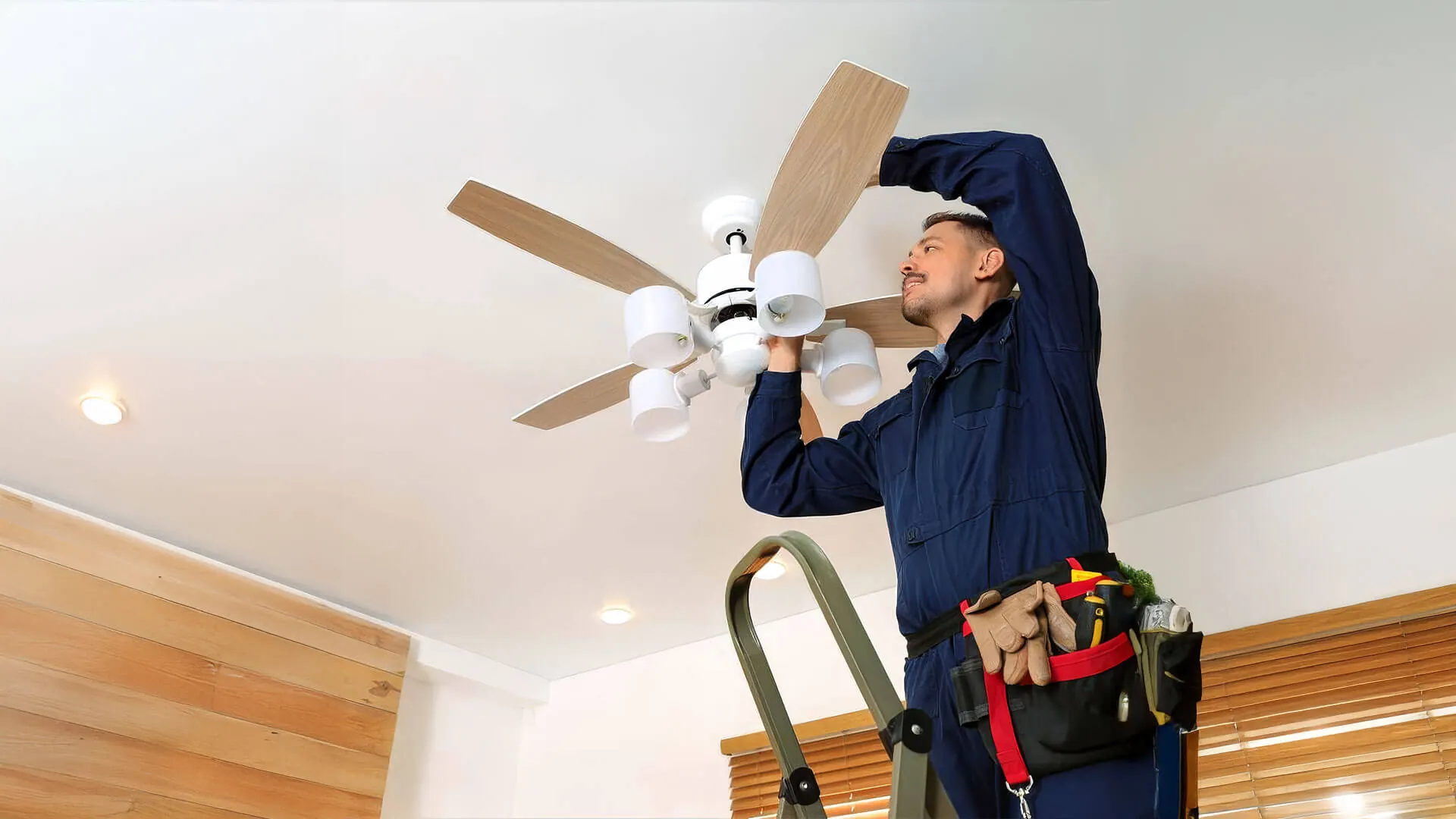
Existing Point, New Point, or Somewhere Between
The Cost Variable Nobody Explains Before They Arrive
Three situations cover nearly every fan job. Either a fan already hangs there, in which case the wiring, switch and mounting are done and the swap is quick. Or a light fitting sits where you want the fan, which means opening the ceiling for a rated mounting block and often running a second switch wire so the fan and light work independently. Or there is nothing on that ceiling at all, and cable has to come from an existing circuit through the roof space and down to a switch. Every step up adds time, materials and cost. Knowing which one you have before booking is why our quotes hold.
Call Us: 1300 000 000September Is When Brisbane Remembers Its Fans
Book Before the First Humid Week, Not During It
Fan enquiries climb through September as the nights stop cooling off, and by the first genuinely sticky week the diary tightens right up. If you already know a room needs one, the quiet part of the year is when to do it. Our vans carry downrods, sloped ceiling adaptors, mounting blocks and the common remote receivers, so a straightforward fitting is finished the day we arrive. Bedroom fans, alfresco fans and three in one units for bathrooms all book the same way.
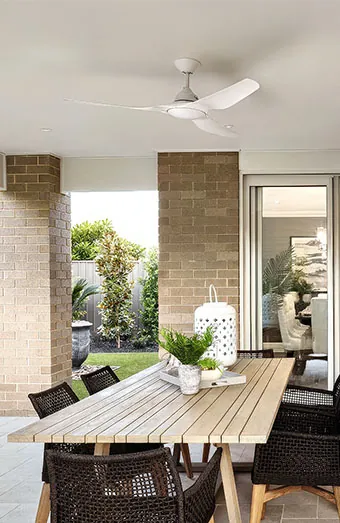
Other Brisbane Services We Offer
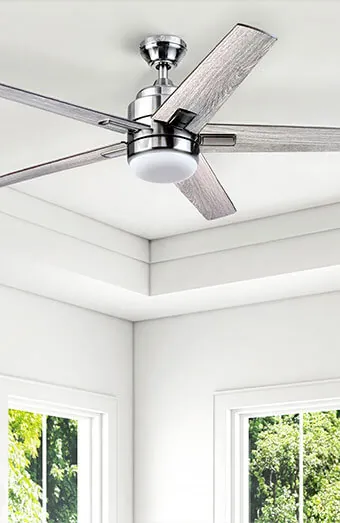
DC or AC, and Why It Changes the Room
Quieter Motors, More Speeds, Less Power Drawn
AC motor fans are the traditional choice. Cheaper to buy, usually three speeds, often a wall controller, and they do the job perfectly well. DC motor fans cost more up front, draw noticeably less power, run much quieter at low speed and typically give you six speeds with a remote and a reverse setting for winter. In a bedroom, that quietness is the whole argument. Either way the installation matters more than the badge on the box: a rated block into a joist, the correct downrod for the ceiling height, and blades balanced so nothing wobbles at top speed.
Call Us: 1300 000 000Your Ceiling Fan in Three Steps
Ask the right question, fit it properly, run it up.
Most fan quotes go sideways because nobody asked what is already in the ceiling. We ask first, so the price you hear on the phone is the price that turns up on the invoice.
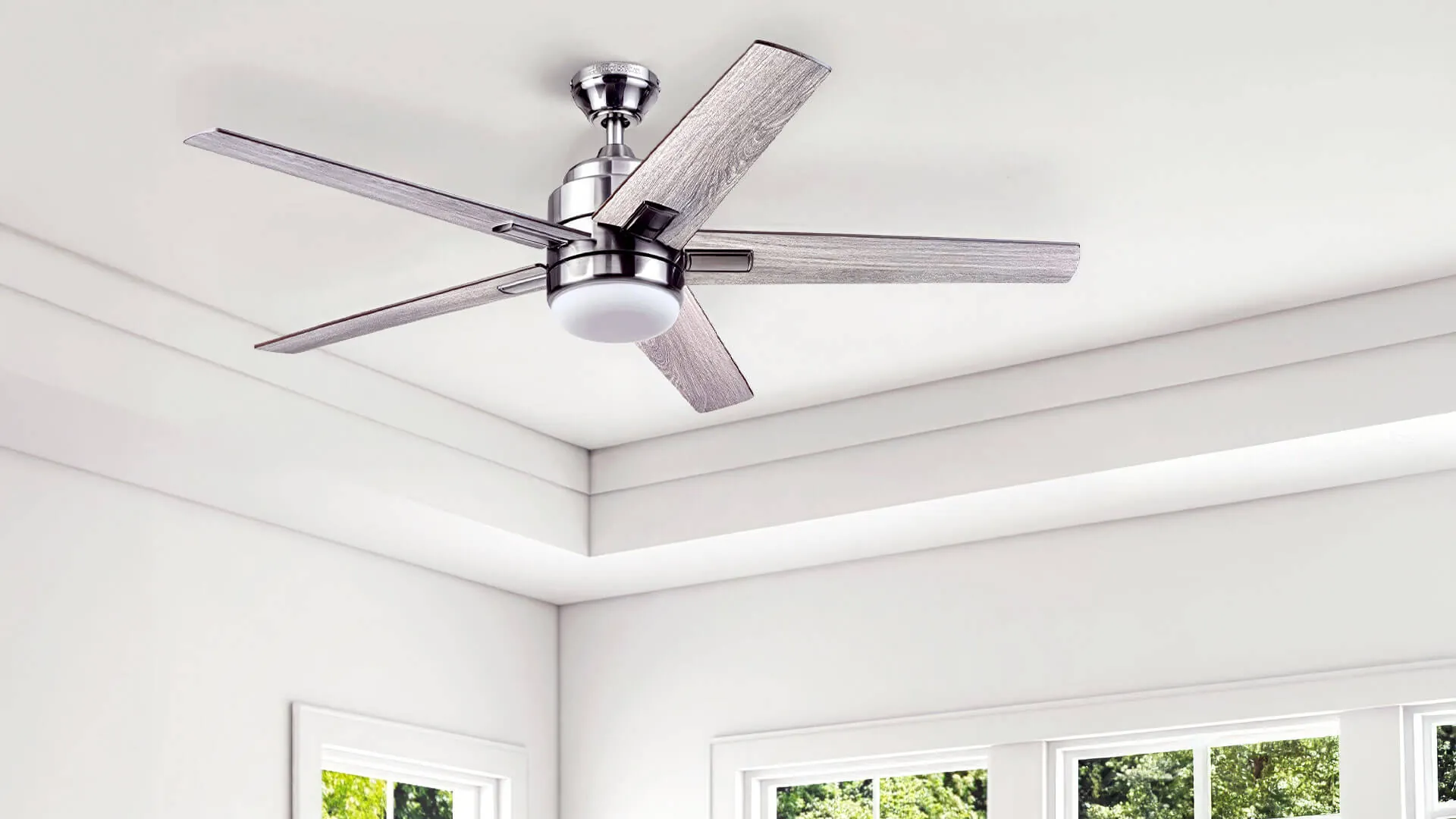
STEP 1 - Ask
Existing point, light only, or nothing at all.
Two questions sort out which job you actually have and what it should cost. Where a fan already hangs there, we can usually give you a firm figure without a site visit at all.
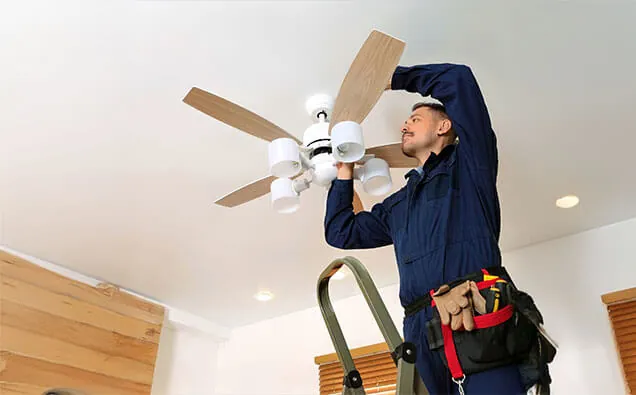
STEP 2 - Fit
Rated block to a joist, wiring to AS/NZS 3000.
The mounting goes into structure, never plasterboard. Downrod length is set for the ceiling, raked ceilings get an angled adaptor, and the wall controller or remote receiver is wired and paired.
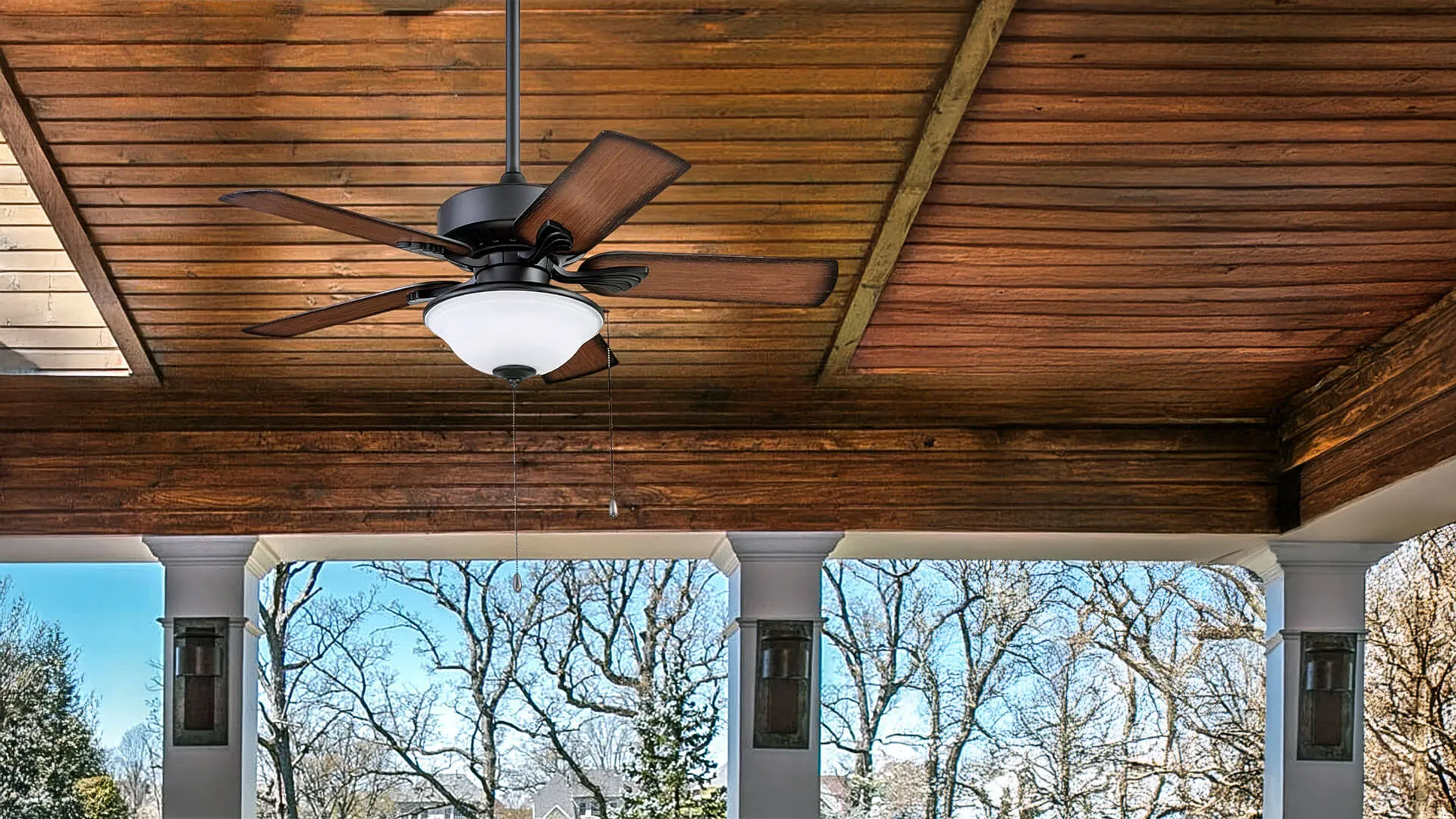
STEP 3 - Run
Every speed, plus reverse, before we pack up.
The fan runs through each speed and the reverse setting, gets checked for wobble at full noise, and the controls are demonstrated. Anything that hums or shakes is sorted while we are there.
Working Right Across Brisbane
Brisbane electricians covering the northside up to Chermside, plus the southside, bayside, western suburbs, Logan and Ipswich.
We also cover Brisbane Northside (to Chermside), Brisbane Southside, Brisbane Eastern Suburbs, Brisbane Western Suburbs, Bayside & Redlands, Logan, Ipswich. Not on the list? Call us and we will tell you straight away whether we can get to you.
Frequently Asked Questions
- How much should you pay to have a ceiling fan installed?
- The biggest factor is whether a wiring point already exists in that ceiling. Replacing a fan on an existing point is a short job with a small, predictable price. Installing where there is only a light fitting, or nothing at all, means new cable, a switch position and a rated mounting block, which costs considerably more. Fan type, ceiling height and roof access move it further. We confirm the figure before starting.
- Do I need an electrician to install a ceiling fan?
- Yes. Connecting a ceiling fan to fixed wiring is electrical work, and in Queensland that must be done by a licensed electrician. It is not only a legal question. The fan hangs overhead and spins for years, so the mounting has to be fixed into structure and the wiring terminated correctly. Unlicensed work can also complicate an insurance claim if something goes wrong later.
- How long does it take an electrician to install a ceiling fan?
- Swapping a fan on an existing point normally takes 45 minutes to an hour, including assembly and testing. A new wiring point takes far longer, often two to three hours, because it means getting into the roof space, running cable to a switch, fixing a mounting block to a joist and making good afterwards. Raked ceilings and high living areas add time again.
- Can you install a ceiling fan yourself in Australia?
- No. Homeowners cannot legally carry out fixed electrical wiring anywhere in Australia, Queensland included. You can buy the fan and assemble the blades, and plenty of our customers do exactly that, but the connection and the mounting must be finished by a licensed electrician. We are happy to install a fan you have bought, and we will say up front if it does not suit the ceiling.
- How much does Bunnings charge to install a ceiling fan?
- Retailers and job marketplaces publish flat installation figures, and those figures almost always assume the simplest case: a straight replacement on an existing point, a flat ceiling and easy access. Anything beyond that gets requoted on the day. We would rather ask the two questions that decide the price up front and quote the real job than advertise a number that moves once the ladder is up.
- Can you put a ceiling fan where there is only a light fitting?
- Yes, and it is one of the most common jobs we do. The light comes down, the ceiling is opened enough to fix a rated mounting block to a joist, and the existing circuit is checked for capacity. If you want the fan and the light switched separately, a second switch wire has to be run, which is worth deciding before we start rather than after the ceiling is closed up.
- What size ceiling fan suits my room?
- Match the blade span to the room. Spaces under about 12 square metres suit a 900mm to 1050mm fan, average bedrooms and living rooms take a 1200mm, and large open plan areas want 1400mm or wider. Ceiling height matters too. Blades need to sit at least 2.1 metres above the floor, and that clearance is what the downrod length is chosen to achieve.
Cool the Room Before the Power Bill Climbs
Licensed Brisbane electricians for ceiling fan installation, replacements, alfresco fans and quiet DC models. Existing point or new point priced up front, no call out fee, work guaranteed.
Call Us: 1300 000 000